Patchstack
Patchstack

Prompt
to protect

Automatic security for apps built with Lovable, Replit, Claude and other AI tools. One prompt installs Patchstack — it then blocks leaked secrets and exploitable vulnerabilities, with no code changes.

Apply for early access

Interactive demo

Secure an AI-built app with one prompt

  1. Prompt
  2. Install
  3. Protected

One prompt is typed for you — then press Run prompt.

my-app
Publish
U
You
Build my app
Likable Bot
Done! Your app is ready and running

your AI-built app

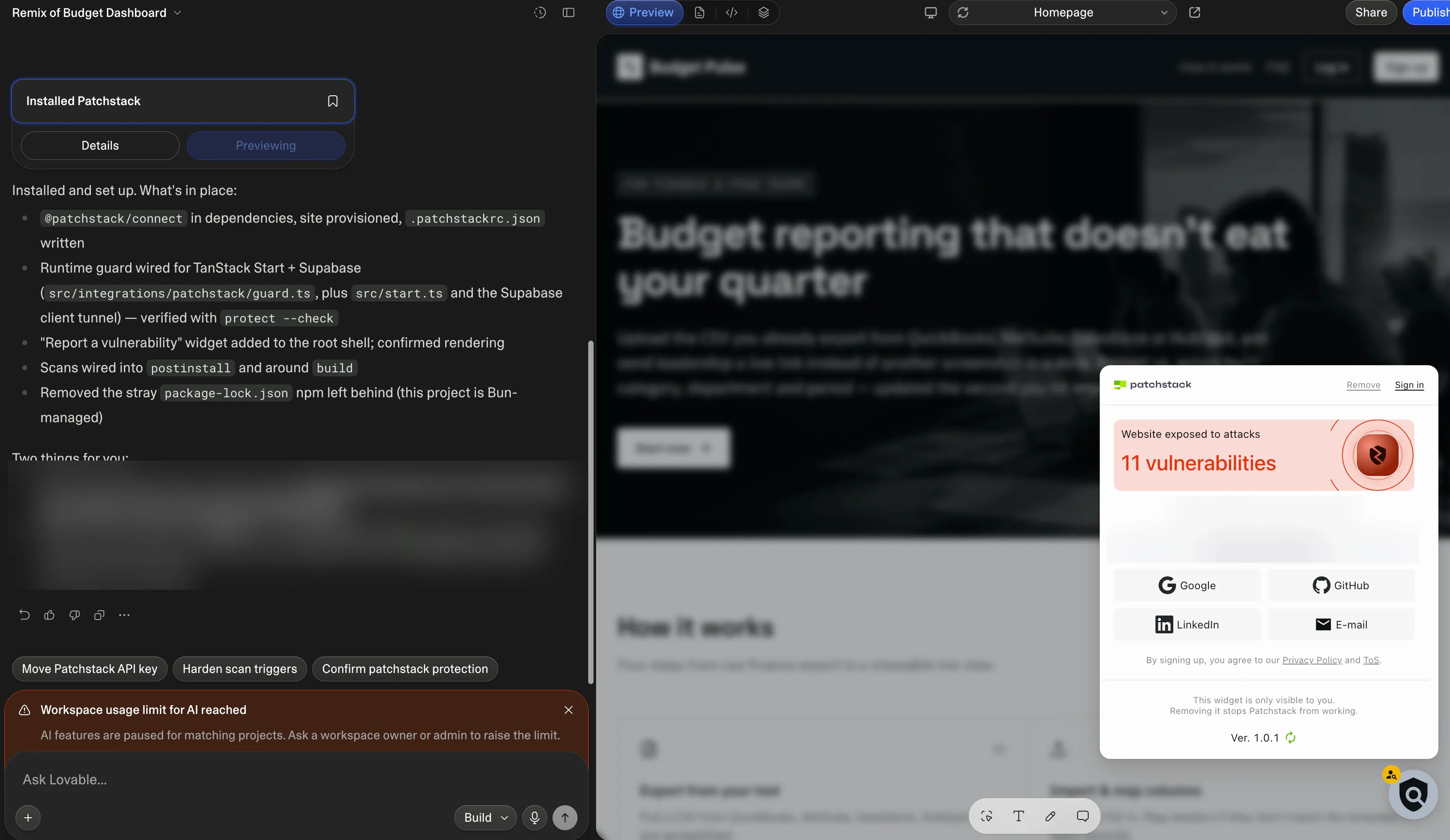
Patchstack installed

Vulnerability overview

Protection

Active

Vulnerabilities in packages31
Highly exploitable4
Exploitable20
No to low impact7
Vulnerabilities mitigated24
Packages installed442
Outdated43

Patchstack is blocking attacks on this site until official fixes are available.

View full details

That's how simple protecting your AI-built apps can be.

Apply for early accessor scroll down to learn more

What's hiding in the code you didn't write?

Vulnerable packages, leaked API keys, internal errors spilling out to anyone who asks — AI-built apps are not secure out of the box, but you're responsible for them anyway.

Patchstack stops leaked secrets and mitigates exploitable vulnerabilities automatically — one install prompt, no code changes, no security expertise required.

How Patchstack solves this

01 · Secrets

Prevent leaking API keys and secrets

Your OpenAI key, your database credentials, your Stripe secret — leaking out through an API response, an error page, or a debug route you forgot was live. We catch them on the way out, before the response reaches the internet.

14 patterns blocked

Secrets leaking in a response

  • Private key-----BEGIN … PRIVATE KEY-----blocks
  • Database connection stringURIs carrying credentials, for Postgres, MySQL, MongoDB, Redis and AMQP
  • AWS access key IDAKIA…ASIA…
  • Google API keyAIza…
  • Vendor API keys and tokensStripe, GitHub, GitLab, Slack, Anthropic, Google OAuth and npm
  • Supabase secret key
  • Supabase service_role key

02 · Dependencies

Mitigate vulnerable components and dependencies in your apps

Your app pulls in hundreds of packages you never chose. We run reachability analysis to work out which of their vulnerabilities your code can actually hit — so you're not chasing findings that can never be exploited — then mitigate the ones that count. No update, rebuild, or extra prompt needed.

442

packages scanned

31

vulnerabilities found

24

actually reachable

24

auto-mitigated

Numbers from the demo app above.

What a mitigation rule looks like

CVE-2025-29927

Next.js middleware auth bypass

Actively exploited in the wild
The attack
A request arrives carrying a crafted x-middleware-subrequest header. Next.js reads it as an internal subrequest and skips your middleware — including the auth check guarding your admin routes.
The mitigation rule
A reviewed rule, scoped to the routes your app actually exposes, runs inside your app and blocks requests carrying that header before middleware runs. Your traffic never leaves your app to be checked.
What you do
Nothing right now. Your app picks the rule up on its next refresh, and only if it's running an affected version. You still upgrade — the mitigation rule buys you the time to do it on your own schedule.

Same engine, three places a rule can act: incoming requests, outgoing responses, and the calls your app makes to the outside world.

03 · Agent code

Secure custom code from Claude

Code written by an agent mid-session, merged without review. We monitor it the same way we monitor everything else.

feat: add /export endpoint · claude-agent · mergedMonitored

How it works

  • One prompt, installed

    One prompt, installed

    Patchstack wires itself into the project — dependencies, runtime guard, scans.

  • Live on your site

    Live on your site

    The widget sits on the running app and reports what it is protecting.

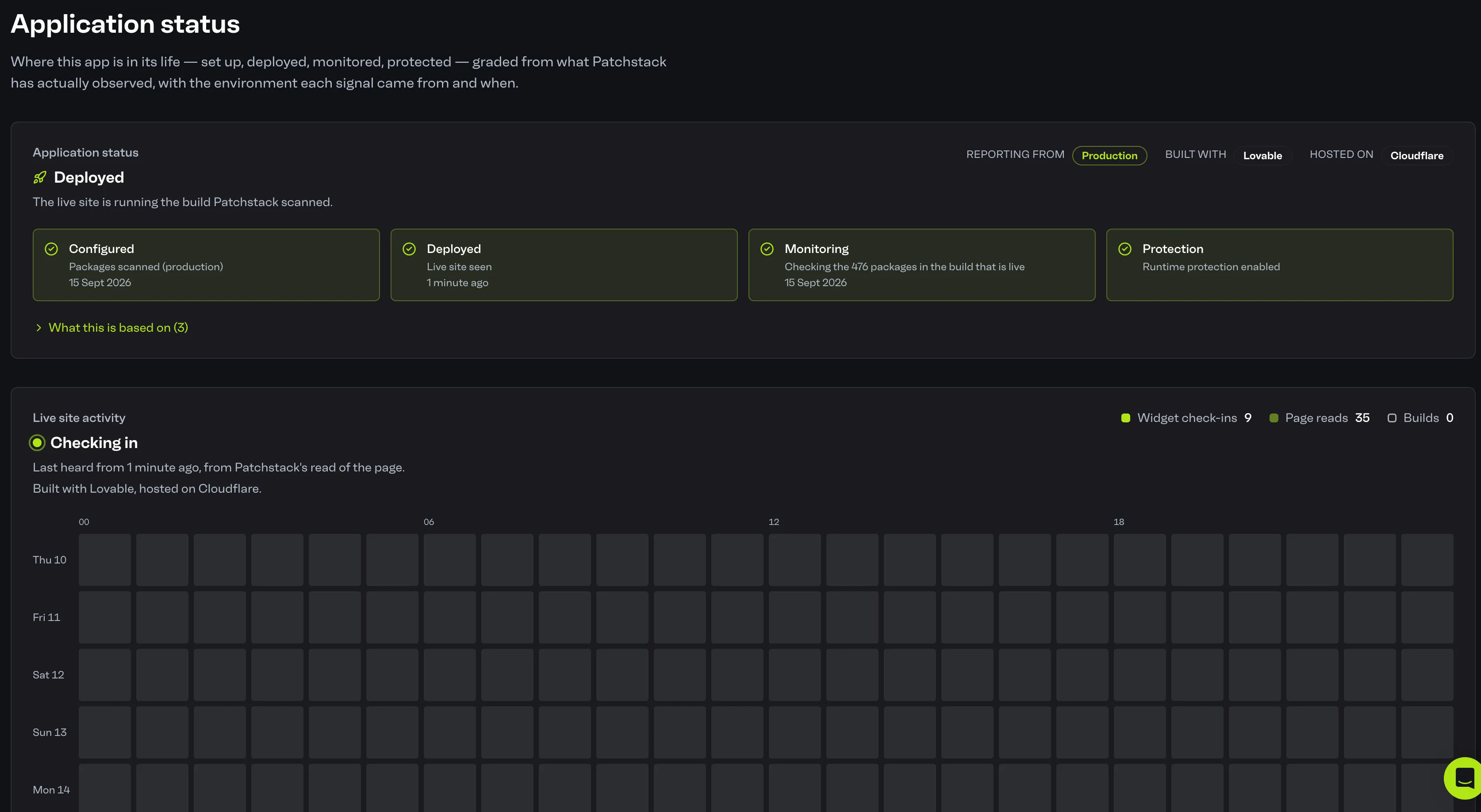
  • Deployed and protected

    Deployed and protected

    Where your app is in its life — set up, deployed, monitored, protected.

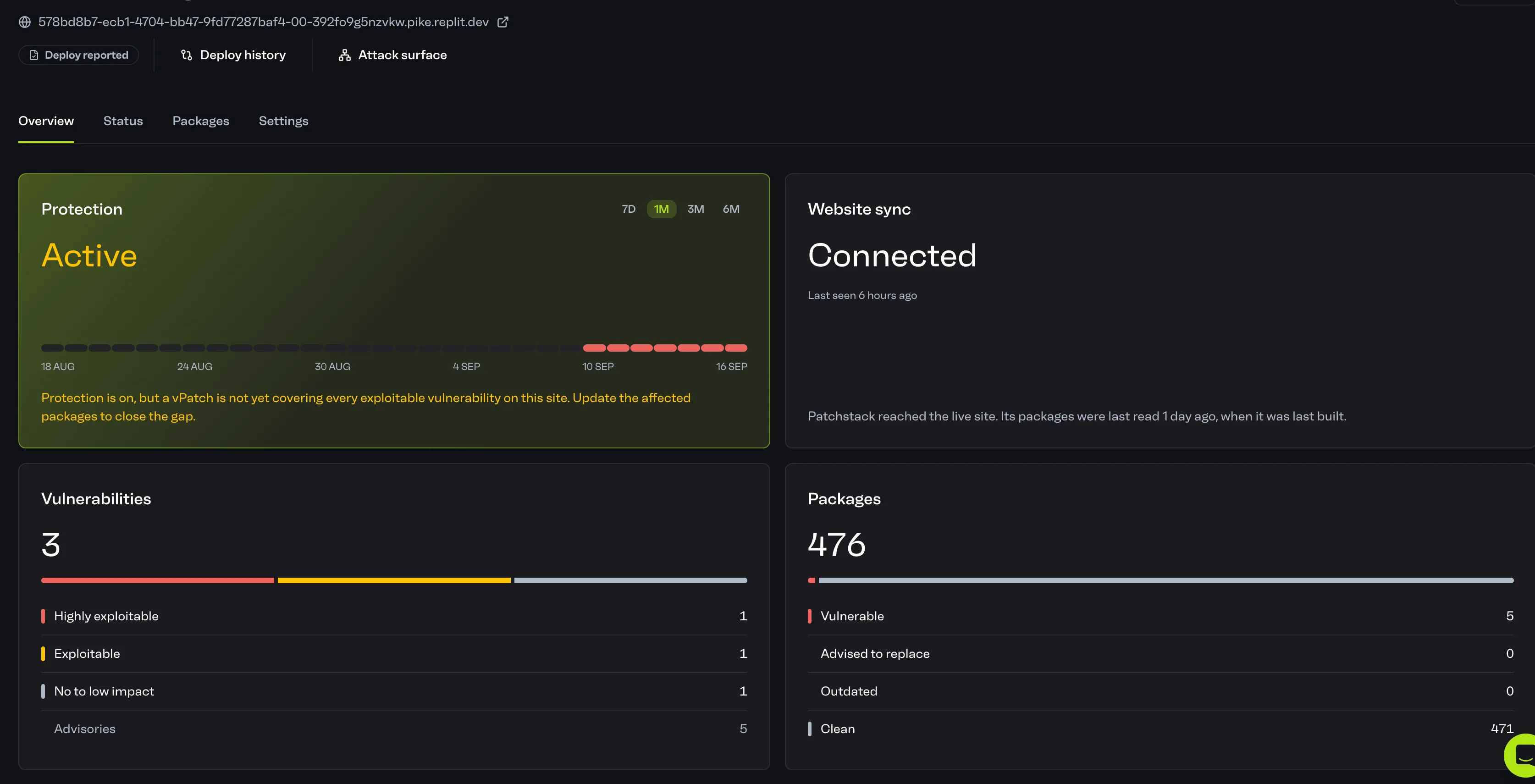
  • Your app, at a glance

    Your app, at a glance

    Protection status, what is exploitable, and every package we are watching.

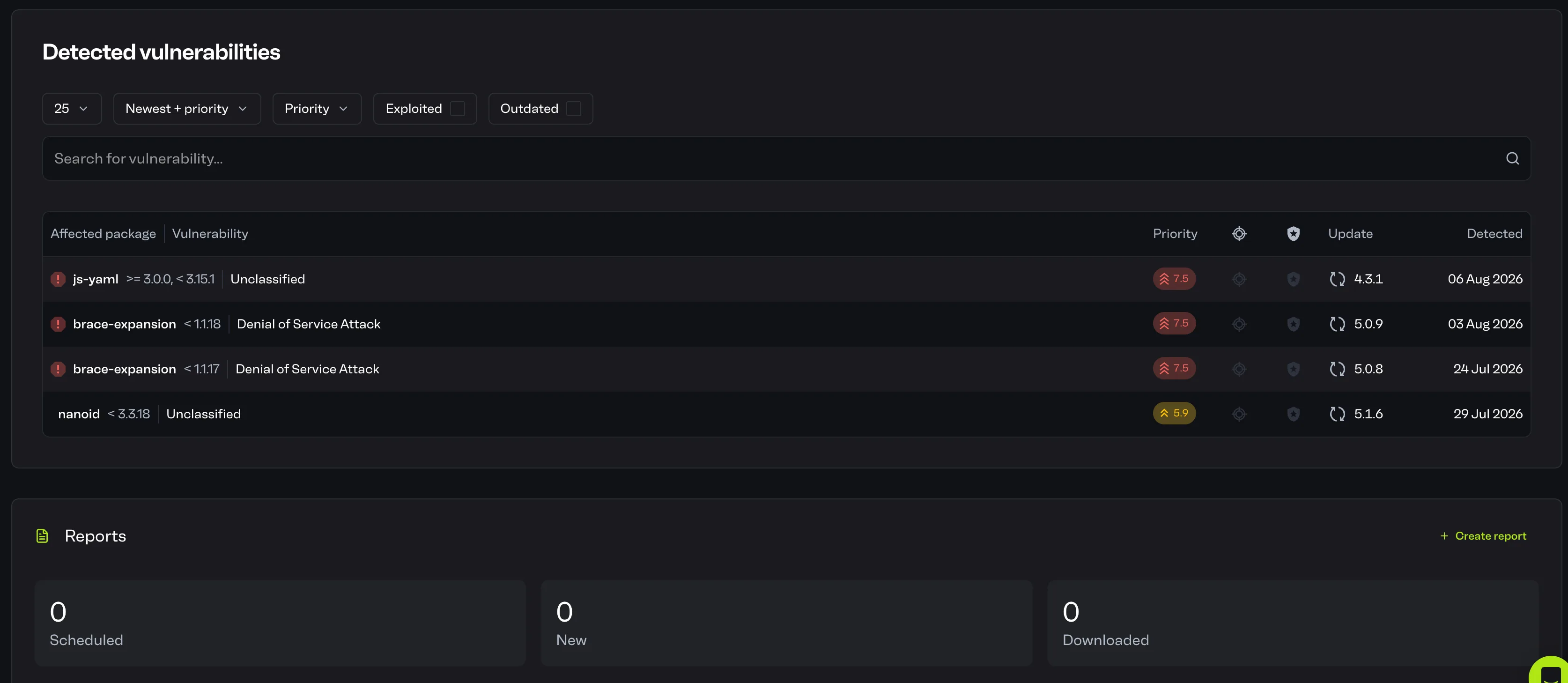
  • Every vulnerability we found

    Every vulnerability we found

    The affected package, how serious it is, and the version that closes it.

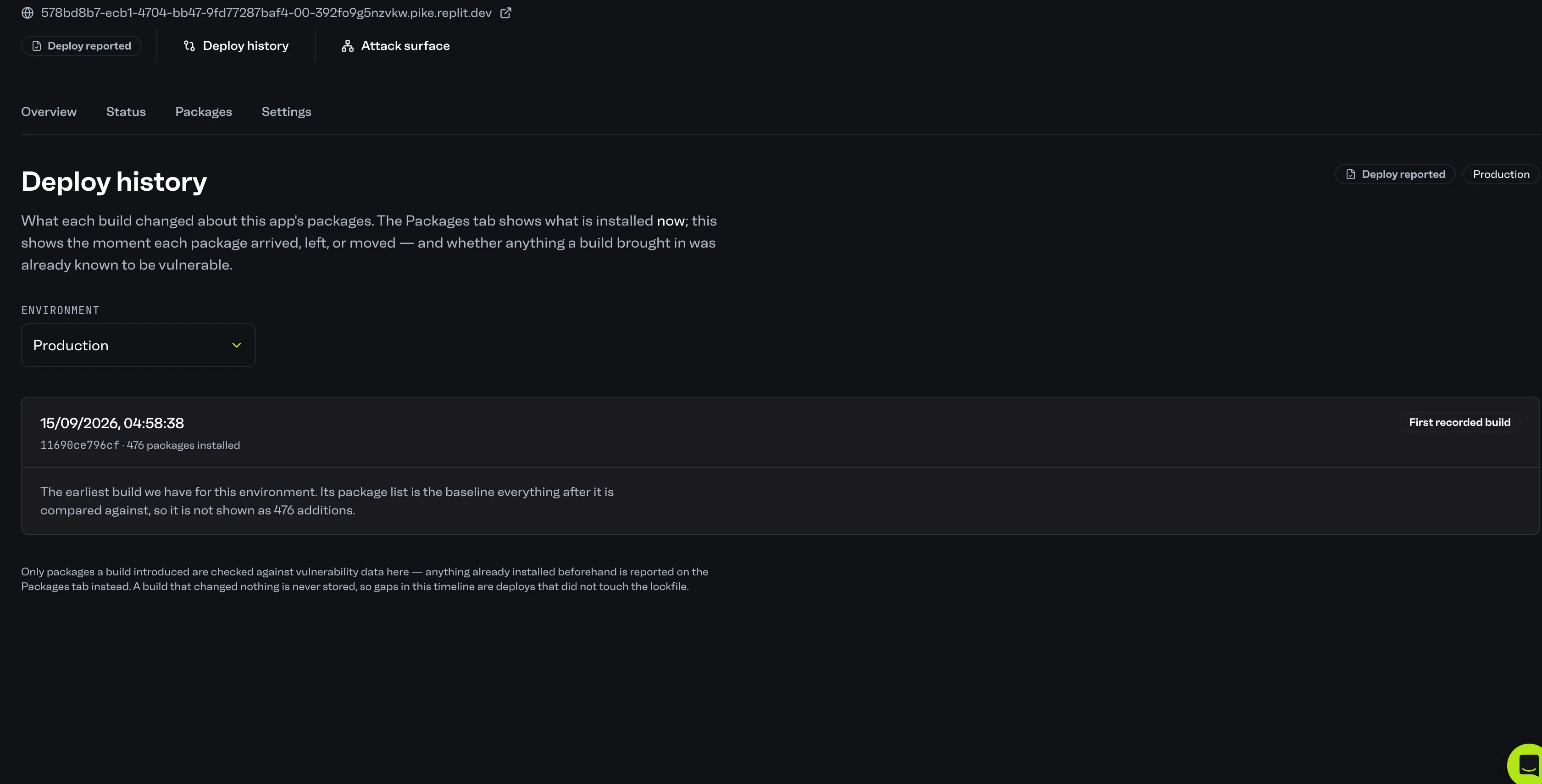
  • Why we say it's protected

    Why we say it's protected

    Every signal behind the status — which build, which environment, and when.

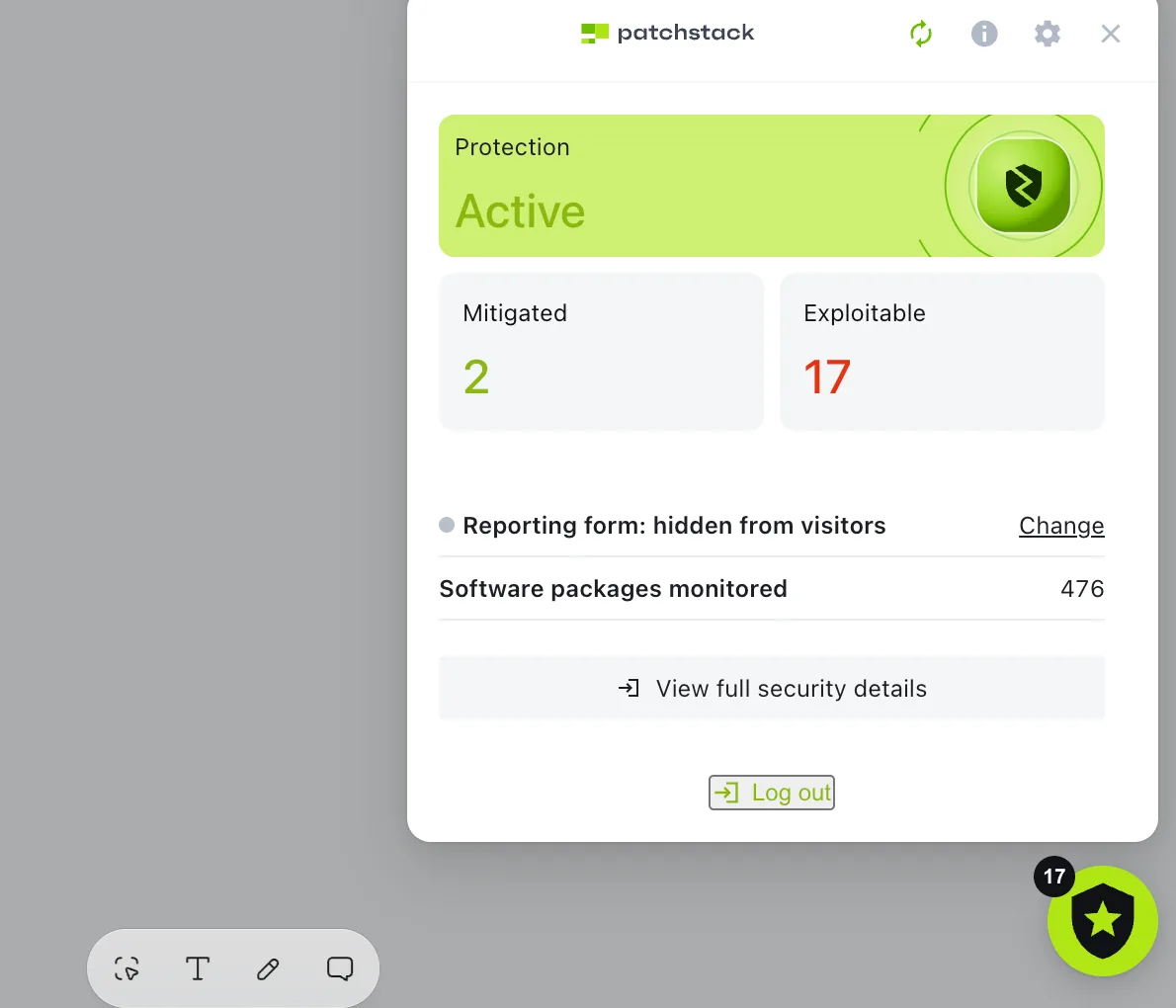
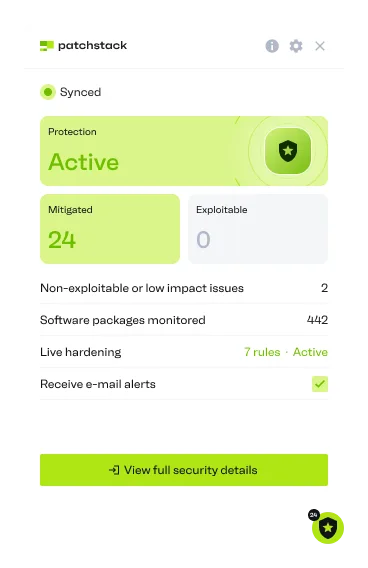
  • The widget, inside your app

    The widget, inside your app

    What is mitigated right now, without leaving the app you built.

  1. 01

    Connect

    Simple install prompt, once per app. No configuration or security knowledge needed.

  2. 02

    Detect

    See blocked vulnerabilities and prevented leaks right inside your favorite AI coding tool.

  3. 03

    Mitigate

    Warnings without action are noise. Patchstack mitigates vulnerabilities and data leaks automatically. No code changes, no rebuilds, no redeploys.

Apply for early access

Early access is limited, and free to use while it lasts.

Loading form…

Questions

What the FAQ

Is this a one-time scan or continuous protection?
Continuous protection. When you first connect your app, Patchstack scans it and mitigates all known vulnerabilities to date. From there, it keeps regularly checking your app and blocks any new vulnerabilities.
What are vulnerabilities?
Vulnerabilities are weak spots in the packages your app is built out of. It's not something you did wrong, but a flaw in the package's code. The problem is that attackers can find vulnerable packages and then launch mass attacks against as many websites online that use the same package to exploit the vulnerabilities. That's what we're stopping.
Am I at risk of being hacked if I don't share my site anywhere?
Yes. If your site is online, it's at risk. Hackers don't only launch targeted attacks: they mass-target as many sites online as possible. If your site has a vulnerable component, it could be compromised.
Will Patchstack change my code or rebuild my app to secure it?
No. We don't touch your code. We watch for attacks and block them in real time — nothing gets rewritten, nothing gets rebuilt or redeployed. For hardening, we don't touch your code either. Masking replaces the secret and leaves the rest of the response intact. Where the sensitive material runs past what we can cleanly mask, such as a private key, a database connection string, or a stack trace, we withhold that response instead. Your code and your deploy are untouched either way. The one exception is a small set of early-warning checks on incoming requests, which we deliberately watch on real traffic before letting them block anything.
Do you just tell me to update a vulnerability?
No. We block attacks against that vulnerability, so you can update it on your schedule while Patchstack protects you.
Does this work for my actual custom code, or just the packages I installed?
Both, in different ways. For known vulnerabilities, we cover the shared packages your app is built on; those are the highest-value targets, because one flaw reaches hundreds of thousands of apps at once. For your own code, including anything an agent wrote mid-session, our hardening rules watch what your app actually does: a leaked key, a stack trace, an outbound call somewhere it shouldn't go. We don't need to have seen your code before to catch those.
What's the difference between vulnerability mitigation and hardening?
Vulnerability mitigation stops known weak spots in the building blocks your app is made of (packages). Hardening checks how your app itself is set up — things like whether an API key is accidentally left visible in a response, or whether your app can be tricked into calling internal infrastructure it should never reach. Different problem, same goal: nobody gets in. We protect you against both.
What does the hardening module actually check for? Will it fix issues automatically?
Right now we check for mistakes like secrets accidentally leaking out in a response (like an AWS key or a Stripe token), internal error details leaking out (stack traces that reveal how your app is built), your app being tricked into calling internal cloud infrastructure it should never reach, and a couple of early-warning patterns in incoming requests that often show up before an attack. Leaked secrets and internal error details are stopped automatically the moment they'd leave your app. Outbound calls to internal cloud infrastructure are blocked outright. A third group of checks, for prototype pollution and directory traversal patterns in incoming requests, is in a watch-and-learn phase. These patterns show up in ordinary traffic too (a docs page or a file browser can contain them legitimately), so we're confirming they don't fire on real users before letting them block anything.
I'm not technical. Is Patchstack still for me?
Yes, and you'll understand what we blocked at a glance. You don't need to understand packages, dependencies, PRs, or anything else. Every app built with AI comes with hundreds of small building blocks under the hood — some of them are exploitable. We handle finding and blocking that; you don't need to understand it.

About Patchstack

Patchstack combines security research and cutting-edge application security tools to mitigate WordPress vulnerabilities faster than attackers can exploit them.

In 2026, we are taking that research expertise and bringing it to all Node.js applications.